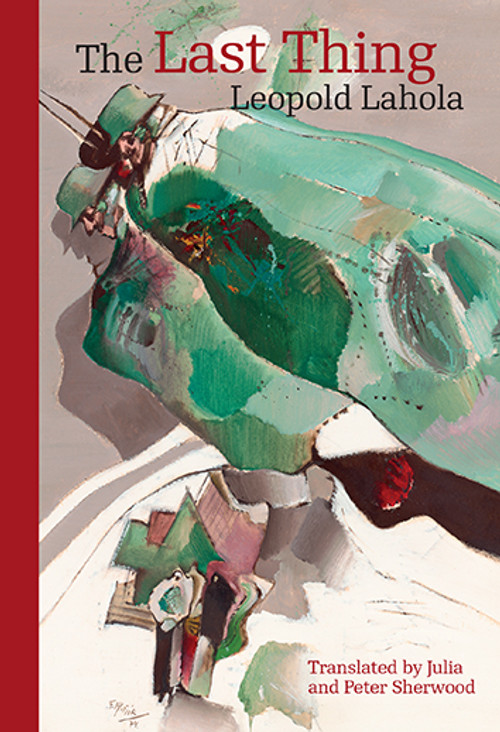
The Last Thing
Lahola LeopoldSlovak Jewish writer Leopold Lahola escaped deportation to a concentration camp and fought in the resistance, only to find himself forced into exile by the postwar communist regime. He emerged from obscurity during the brief thaw of the Prague Spring, whenhe was able to return to his homeland, thriving as a playwright and film director. Čítať ďalej ↓
It was also in 1968 that his short story collection The Last Thing appeared in Slovakia. The collection's title proved sadly prophetic with the author suffering a fatal heart attack in January 1968, just before his 50th birthday and as his short stories finally appeared in book form. The nine stories which make up The Last Thing range from the prewar rise of fascism and its dangers for the Jewish community through the concentration camps and the partisan fight against the Germans, concluding with a devastating summation of all that had been lost and destroyed in the war. Lahola writes masterfully outside of conventional tropes, exploring moral ambivalences where others work comfortably within the simple opposition of good versus evil. He punctures the standard historical image of the partisan fighters by depicting their heroism alongside their cruelty and pettiness while also showing how often bravery and madness, kindness andstupidity can coexist. Lahola has written a sequence of World War II stories whose translation will offer not only a compelling read but starkly new perspectives on the tragedy and grandeur of that momentous time in history.