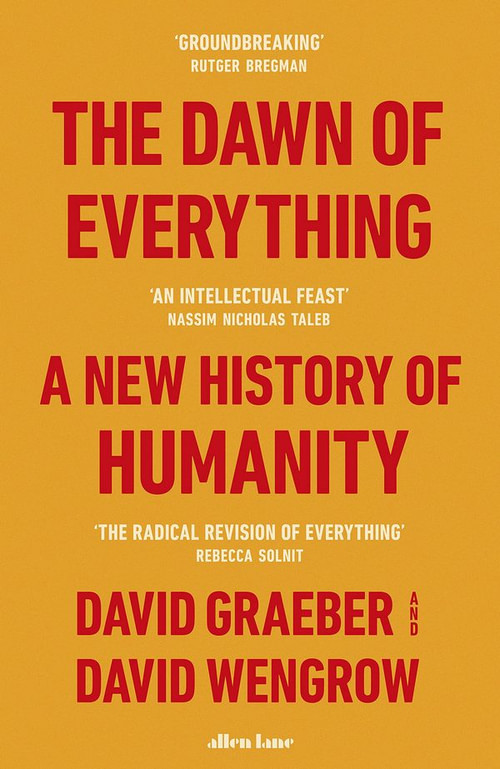
The Dawn of Everything A New History of Humanity
Graeber David, Wengrow DavidFor generations, our remote ancestors have been cast as primitive and childlike - either free and equal, or thuggish and warlike. Civilization, we are told, could be achieved only by sacrificing those original freedoms or, alternatively, by taming our baser instincts. Čítať ďalej ↓
David Graeber and David Wengrow show how such theories first emerged in the eighteenth century as a reaction to indigenous critiques of European society, and why they are wrong. In doing so, they overturn our view of human history, including the origins of farming, property, cities, democracy, slavery and civilization itself. Drawing on path-breaking research in archaeology and anthropology, the authors show how history becomes a far more interesting place once we begin to see what's really there. If humans did not spend 95 per cent of their evolutionary past in tiny bands of hunter-gatherers, what were they doing all that time? If agriculture, and cities, did not mean a plunge into hierarchy and domination, then what kinds of social and economic organization did they lead to? The answers are often unexpected, and suggest that the course of history may be less set in stone, and more full of playful possibilities than we tend to assume. The Dawn of Everything fundamentally transforms our understanding of the human past and offers a path toward imagining new forms of freedom, new ways of organizing society. This is a monumental book of formidable intellectual range, animated by curiosity, moral vision and faith in the power of direct action.